
Peer-reviewed articles
Could Weaving Be the Ancestor of Writing in the Amazigh Language?
AUTHOR: Fatima Sadiqi
Could Weaving Be the Ancestor of Writing in the Amazigh Language?[1]
Fatima Sadiqi
Sidi Mohamed Ben Abdellah University
Abstract: This study examines structural parallels between Amazigh textile designs and the Tifinagh script, focusing on pre-standardized forms such as the rock alphabets that predate Neo- or IRCAM-standardized variants. It advances a twofold argument about the cultural and formal connections between weaving and writing. First, it proposes that Amazigh weaving traditions played a foundational role in the emergence of writing. Second, it argues that the continued vitality of both the Tifinagh script and the Amazigh language derives in part from the enduring practice of weaving. Although Amazigh functioned predominantly as an oral language for much of its history, communities later codified it in the Tifinagh script, whose origins this study traces to the symbolic and geometric motifs embedded in textile production. The advent of Islam in the seventh century decisively transformed these practices by introducing religious, legal, and literary frameworks that shaped the production, circulation, and interpretation of textiles, as well as the transmission and adaptation of the script. Despite these transformations, the connection between weaving and writing remained resilient, as archaeological, historical, and architectural evidence demonstrates. This enduring symbolic thread positions weaving not merely as a craft but as an ancestral visual language that anchors Amazigh literacy, structures cultural memory, and sustains the origins, evolution, and significance of Tifinagh writing—revealing a continuity between material culture and written expression.
Keywords: Amazigh, tapestry, Tifinagh, origins, Tamazgha
Introduction
The Amazigh people, indigenous to North Africa, have a long tradition of textile weaving, an art that is not just functional but one that carries ancestral memory, protective symbols, and identity. Designs vary by region (e.g., the Tuareg, Kabyle, Zayan, or Souss) but share recurring geometric motifs.
This study examines structural parallels between Amazigh textile designs and the Tifinagh script, focusing on pre-standardized forms such as the rock alphabets that predate Neo- or IRCAM-standardized variants. It advances a twofold argument about the cultural and formal connections between weaving and writing. First, it proposes that Amazigh weaving traditions played a foundational role in the emergence of writing. Second, it argues that the continued vitality of both the Tifinagh script and the Amazigh language derives in part from the enduring practice of weaving. Although Amazigh functioned predominantly as an oral language for much of its history, communities later codified it in the Tifinagh script, whose origins this study traces to the symbolic and geometric motifs embedded in textile production. The advent of Islam in the seventh century decisively transformed these practices by introducing religious, legal, and literary frameworks that shaped the production, circulation, and interpretation of textiles, as well as the transmission and adaptation of the script.[2] Despite these transformations, the connection between weaving and writing remained resilient, as archaeological, historical, and architectural evidence demonstrates. This enduring symbolic thread positions weaving not merely as a craft but as an ancestral visual language that anchors Amazigh literacy, structures cultural memory, and sustains the origins, evolution, and significance of Tifinagh writing, revealing a continuity between material culture and written expression.[3]
Extending this perspective to the Amazigh built environment further strengthens the argument. Vernacular architecture in Amazigh regions—particularly domestic structures, granaries, and fortified settlements—consistently uses geometric abstraction, repetition, and patterned organization,[4] as builders articulate façades through rectilinear compositions, structure spatial layouts according to modular principles, and incorporate decorative motifs that resonate with both Amazigh textile designs and the linear forms of the Tifinagh script. This convergence reflects not merely an aesthetic preference but a shared system of visual reasoning that operates across media, where geometry functions as a cognitive and cultural framework for organizing space, meaning, and social life. Architectural elements such as walls, doorways, and storage units echo the balance and symmetry found in woven patterns, indicating that similar compositional logics guide both practices. At the same time, these built forms act as enduring repositories of cultural knowledge: just as textiles encode identity, memory, and symbolic meanings through pattern, architectural spaces materialize social relations, gendered practices, and communal values. The repetition of specific motifs across surfaces—whether carved, painted, or assembled—reinforces their mnemonic and communicative functions, enabling buildings themselves to participate in a shared semiotic system of inscription. In this way, the alignment between architectural design, textile composition, and script underscores the permeability between functional and symbolic domains, demonstrating that abstraction, modularity, and repetition are not isolated artistic choices, but foundational principles embedded in Amazigh epistemologies that shape how knowledge is structured, visualized, and transmitted across generations.
Admittedly, formulating definitive conclusions about the argument on which this paper is based remains challenging given the complex historical trajectories of Amazigh language and culture, the fragmentary and unevenly preserved material record, and the epistemological limits involved in reconstructing partially non-textual systems of knowledge. Periods of marginalization, the predominance of oral transmission, and discontinuities in documentation complicate any linear account of the relationship between textile practices and the development of the Tifinagh script. Nevertheless, the persistence and specificity of the parallels between Amazigh textile designs and the formal properties of Tifinagh—particularly their shared reliance on geometric abstraction, linearity, symmetry, and repetition—demand sustained scholarly attention, as these correspondences point to structurally embedded affinities rather than superficial resemblance. It is precisely the recurrence and coherence of these patterns across media that render this intersection analytically productive and motivate the present study. To engage this argument, the study adopts an interdisciplinary framework that integrates history, archaeology, and linguistics, while also drawing on anthropology and material culture studies to account for the embodied and social dimensions of these practices; in doing so, it situates textiles and script within broader socio-historical contexts, grounds the analysis in material evidence, and employs linguistic tools to examine semiotic structures, ultimately seeking to understand how diverse modes of inscription participate in shared processes of knowledge production, transmission, and preservation within Amazigh cultural contexts. To achieve these goals, the study first examines the theoretical relationship between weaving and writing, then analyzes the artistic relationship between weaving and the Tifinagh script and subsequently addresses the linguistic relationship between the two before returning to the central argument.
Is Weaving Related to Writing? Insights from History and Archaeology
Several recent studies have explored the historical, conceptual, or metaphorical connections between textile production—especially weaving, knotting, cordage—and the emergence or evolution of writing, notation, or information systems[5]. These studies highlight two key points relevant to the themes of this paper. First, weaving represents one of the earliest and most widespread forms of structured and patterned human activity. Its significance extends beyond mere utility, engaging complex processes such as sequencing, abstraction, and pattern recognition. Second, these same processes form the foundation of written language development.
For example, Elizabeth Wayland Barber[6] shows that textile technologies (spinning, weaving, pattern‐weaving) are extremely ancient—perhaps older than pottery in some regions—and argues that understanding those technologies (including linguistics, tool marks, patterns preserved in fragments) gives insight into early symbolic thinking, the ordering of material, the idea of pattern, repetition, etc., that precede or underlie later writing systems.
Furthermore, Tim Ingold[7] draws explicit analogies between weaving and writing, highlighting how both practices rely on the systematic organization of linear elements across a surface. He compares the warp and weft of weaving with the ruled lines used in writing, emphasizing that meaning and structure emerge from the careful interlacing of individual elements. Ingold further shows how threads, cords, and strings in weaving transform into traces, marks, or inscriptions, illustrating a continuum from material manipulation to symbolic representation. He also examines how surfaces are formed through these processes, arguing that the creation of patterned surfaces simultaneously produces both functional and communicative meaning. This perspective is particularly relevant to Amazigh visual culture: the geometric motifs that structure textiles and façades, the modular organization of granaries and ksour, and the linear forms of the Tifinagh script all participate in a shared logic of patterning and inscription. Viewed through Ingold’s framework, these practices demonstrate that writing, decoration, and architectural design are not isolated techniques but interconnected material and cognitive processes, in which surfaces, patterns, and forms actively encode knowledge, identity, and cultural memory.
In a similar vein, William Mead Cheek[8] demonstrates that Andean notational systems such as khipus (or quipus) reveal how textile-based methods of information storage—through knotted cords, color-coded fibers, and specialized weaving tools—can develop into generalized notational or writing-like systems. This perspective underscores the broader cognitive and semiotic potential of material practices, in which craft and technique intersect with knowledge transmission—a central concern of this paper, which argues that Amazigh textiles encode cultural, symbolic, and social knowledge through geometric patterns, motifs, and structured arrangements, thereby integrating aesthetic and communicative functions.
Likewise, Nilda Callañaupa Álvarez,[9] a Quechua weaver and director of the Center for Traditional Textiles of Cusco (Peru), shows that Andean weaving encodes and transmits knowledge, and in doing so functions like writing. Patterns, motifs, and structures organize production while inscribing cosmology, social norms, and communal memory. Thus, weaving acts as a “text,” embedding meaning in sequences, colors, and forms across generations. Interpreting these textiles requires both technical skill and cultural literacy, highlighting the link between craft, cognition, and semiotic competence. This perspective aligns with the paper’s central concern, underscoring that geometric motifs in textiles, architectural façades, and Tifinagh inscriptions convey symbolic and communicative meaning.
Additionally, Tobias Zürn[10] investigates the conceptualization of writing in ancient China through weaving metaphors—such as weft, warp, and interlaced threads—particularly in the Huainanzi. He shows that these metaphors were not merely stylistic but reflected a deeper epistemological framework, where the practice and aesthetics of weaving modelled the structure, function, and organization of written language. Linking textile production to literary composition, Zürn suggests that cognitive models of textuality and knowledge were shaped through embodied, craft-based experience. Building on this perspective, Zürn examines intertextuality in the Huainanzi, highlighting how weaving metaphors operate as structural and rhetorical devices, creating layers of meaning that mirror the interlaced threads of a textile. Together, this study reveals that in early Chinese thought, language, metaphor, and material culture were mutually constitutive, with weaving serving as a central framework for conceptualizing textuality, continuity, and knowledge transmission. By this logic, Tifinagh characters may perhaps share cognitive and material principles with Chinese hieroglyphs, a possibility meriting further study.
In another recent study, Lise Bender Jørgensen[11] documents archaeological evidence of early textiles, cordage, and related artifacts, highlighting the material foundations that may have underpinned the emergence of cognitive and communicative systems. These technologies—ranging from spun fibers and knotted cords to woven structures— did not only provide practical solutions for storage, transport, and clothing but also frameworks for organizing, structuring, and transmitting information. Examining these artifacts, the author shows how technical proficiency in manipulating fibers and constructing patterns may have facilitated abstract thinking, symbolic representation, and the conceptualization of complex relational systems. The study further underscores the deep interconnection between material culture and cognitive development, suggesting that literacy, numeracy, and notational practices evolved through embodied engagement with textile technologies. Archaeological evidence thus indicates that knowledge systems are inseparable from the material and technological practices shaping human perception, reasoning, and social communication. This perspective resonates with one of the themes of this paper, in which Amazigh weaving may perhaps not only preserve but also generate knowledge.
More closely related to the focus of this section, Shamil Jeppie[12] argues that writing in Timbuktu (Mali) does not operate as an autonomous textual practice but forms part of a broader ecology of knowledge shaped by material production, circulation, and scholarly networks. He demonstrates that manuscripts were deliberately embedded within complex systems that combined oral transmission, mnemonic techniques, and performative pedagogical practices, ensuring that knowledge circulated dynamically across communities rather than residing solely in written form. This approach highlights the interdependence of material and intellectual practices, showing that African scholarly traditions mobilized multiple media—manuscripts, recitation, memorization, and ritualized reading—to produce, preserve, and transmit knowledge across generations. Jeppie further emphasizes that the physicality of manuscripts, including the choice of paper, ink, and binding, was not incidental but actively shaped how information was organized, interpreted, and transmitted within these networks. In this way, the Timbuktu case exemplifies how material culture, cognitive practice, and social structures operate together, illustrating a model of knowledge production in which writing functions as one component of a richly interconnected system rather than as an isolated medium. Like the authors in the preceding paragraph, Jeppie’s perspective resonates with a major theme of this paper, showing how weaving, like manuscript production, shapes epistemologies and mediates the creation, preservation, and circulation of knowledge.
In sum, this section highlights the deep-rooted commonalities between weaving and writing. Both are structured practices that rely on careful sequencing and syntax to convey meaning—whether through the interlacing of threads or the arrangement of words. They serve mnemonic functions, preserving memory and knowledge through patterned repetition and symbolic design. Moreover, both weaving and writing operate as powerful tools of communication, capable of expressing identity, culture, and narrative. These parallels are not coincidental; they are grounded in historical precedent, with traditions across cultures often positioning textile creation and textual composition as complementary, or even intertwined, forms of expression.
The idea that weaving may have influenced the development of writing systems is, thus, not a new one. We may add the notable etymological and metaphorical links between weaving and writing. For instance, the Latin word texere carries the dual meaning “to weave, braid” and “to write, to construct”[13], suggesting that many cultures understood these practices as intimately connected. In the Amazigh context, the ZḌ script exemplifies this logic: its geometric and modular forms echo patterns in weaving, architectural layouts, and social networks. By interlacing symbols as threads intertwine, the ZḌ actively organizes knowledge, forges social and spatial relationships, and maps communal worlds, functioning as a tool that constructs, curates, and sustains connections across time and place. In this way, Amazigh writing, like weaving, operates not merely as a vehicle of communication but as a living framework for shaping material, social, and symbolic realities.
Other similar concepts or theoretical themes may be cited here. For example, the terms “metaphor” and “imagery” demonstrate how weaving structures writing, interlacing and ordering ideas as mentioned above. Likewise, “materiality” and “cognitive preconditions” show how manipulating threads, patterning, counting, and symmetry—all integral to weaving—cultivates abstraction, classification, and symbolic thought. The terms “preservation” and “archaeology” further indicate that much of the evidence concerning textiles survives indirectly—through impressions, tools, and linguistic traces—reflecting the inherently fragile and transient nature of these materials. Building on these interwoven concepts and methodological insights, we now trace the patterns embedded in Amazigh textile designs and their interplay with the Tifinagh script, following the threads through which form, structure, and symbolism actively encode knowledge, social relations, and communal memory.
Amazigh Textile Designs and the Tifinagh Script: The Artistic Dimension
This section examines the artistic dimension of Amazigh textile designs, which scholars identify as vital forms of creative expression.[14] Historian and archaeologist Ouachi[15] traces archaeological and historical evidence of Amazigh art back to the origins of the Amazigh peoples in North Africa and the Greater Sahara, the cultural and geographical region conceptualized today as Tamazgha. This enduring artistic vitality, like the interlaced threads of the textiles themselves, sustains both the cultural relevance and the innovative dynamism of Amazigh traditions. A particularly striking feature of this creativity emerges in the visual and symbolic parallels between certain textile motifs and the characters of the Tifinagh script. To develop this argument, I first analyse the meanings woven into these designs and their connections to the Amazigh cosmological worldview and belief systems. I then indicate how textile motifs and the Tifinagh script intertwine, and how this convergence threads through other forms of visual culture, including Amazigh tattoos.
Amazigh textile designs are characterized by recurring geometric forms that serve as the foundation for their symbolic language. Diamonds and lozenges rank among the most frequent shapes, as shown in Figure 1 below:
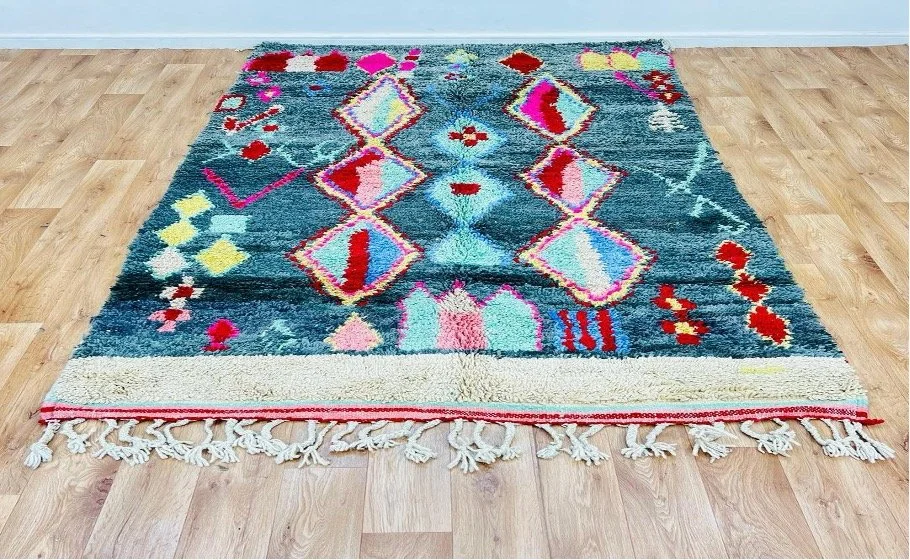
Fig. 1. Source: “The Traditional Berber Carpet | Culture of Morocco.” Region: High Atlas (Morocco). (morocco-guide.com). Layers of Morocco 2023, Izrin 2022.
The diamond and lozenge shapes frequently signify the “eye” that protects from evil and misfortune, while simultaneously invoking associations with fertility and female power.[1]
In addition to diamonds and lozenges, weavers incorporate zigzag patterns, triangles, crosses, and X-shapes, enriching the symbolic diversity of their designs, as Figures 2 illustrates:
[1] Amazighes. Cycles, parures, motifs (MUCEM exhibition catalogue). Marseille: Musée des Civilisations de l’Europe et de la Méditerranée, 2025.
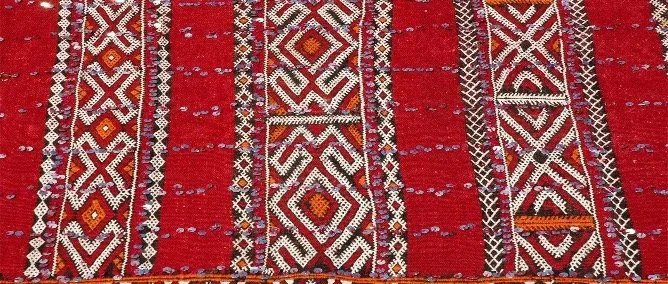
Fig. 2. Source: “The Traditional Berber Carpet | Culture of Morocco.” Region: High Atlas (Morocco). (morocco-guide.com).
Zigzag patterns such as the ones shown in Figure 2 represent water and life’s movement, reflecting both environmental realities and the generative forces central to Amazigh cosmology.[1] Triangles function as markers of protection or the female principle, and crosses and X-shapes denote the cardinal points or serve as talismanic safeguards against misfortune.[2]
Beyond geometric signs, weavers depict stylized animals and plants, adding further layers of meaning to the carpet designs, as Figures 3 and 4 illustrate:
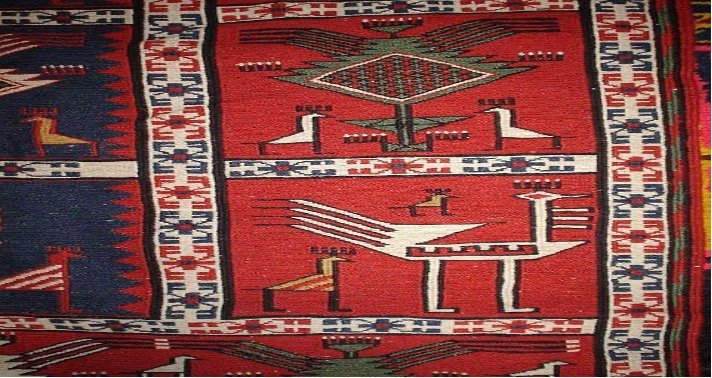
Fig. 3. Source: Amazigh World News website. Accessed September 5, 2025. The motifs representing animals and plants typically symbolize local ecological knowledge, fertility and renewal, seasonal cycles, and, in some cases, ancestral lineage or protective forces (MoMAA 2023).
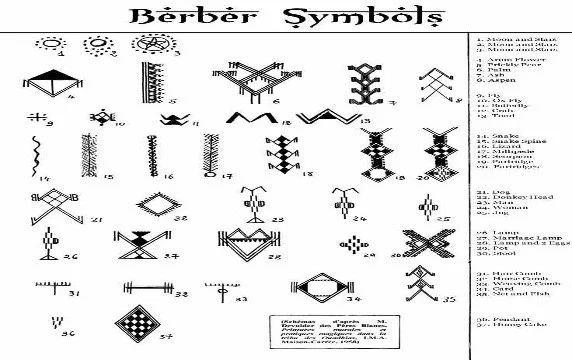
Fig. 4. Source: Amazigh World News website. Accessed September 5, 2025.
Design motifs such as those exemplified in Figures 1–4 operate primarily within culturally significant and ritual contexts, particularly matrimonial ceremonies encompassing fertility rites, protective rituals, and matrimonial blessings.[19] Fertility rites deploy motifs on bridal textiles to encode sexual symbolism and invoke fecundity, linking individual life events to communal continuity. Protective rituals employ motifs as visual talismans, safeguarding against misfortune and expressing spiritual concerns deeply rooted in Amazigh visual culture. Matrimonial blessings convey and reinforce social cohesion, communal identity, and shared values. Beyond decoration, these motifs resonate culturally, reflecting ancestral values, social norms, and spiritual ideologies while conveying multiple layers of meaning. Semiotic analysis identifies three interrelated thematic domains across these motifs: spirituality, articulated through celestial and protective symbols; sexuality, expressed in fertility motifs tied to marriage and continuity; and symbolism, evident in designs communicating communal ideals. These domains often intersect, allowing a single motif to carry multiple levels of significance.[20]
In this framework, celestial symbols such as the sun, stars, and moon exemplify the spiritual dimension, reflecting the Amazigh cosmological worldview.[21] In addition to the sun, the ancient Amazigh people demonstrated profound reverence for the moon, which holds a prominent place within their cosmology. Lunar symbolism is pervasive, frequently representing themes of femininity, fertility, life cycles, and protection. Similar to many ancient civilizations, the various phases of the moon played a crucial role in timekeeping, agricultural planning, and the scheduling of ritual observances. The moon was thus integral not only to practical aspects of daily life but also to the spiritual and symbolic frameworks that structured Amazigh cultural identity.[22] Considered instruments of symbolic literacy within material culture, these motifs historically structured knowledge, mediated social norms, and—despite profound transformations following the advent of Islam—continue to sustain collective memory and communal identity. Agricultural and seasonal practices closely aligned with solar cycles, including solstices and equinoxes, which regulated planting and harvesting, and several contemporary Amazigh festivals retain this solar orientation; for example, Yennayer, the Amazigh New Year, preserves its origins in the solar calendar. Situating textile designs within the ecological contexts of these communities highlights their multifaceted significance. The interplay between environment and cultural practice—including local flora, fauna, climate, and geography—influenced the development of symbolic motifs and artistic expressions. This interaction reflects adaptive strategies, environmental knowledge, and the enduring role of textiles as active carriers of social identity, cultural memory, and cosmological beliefs.
Extending beyond ecological influences, textile motifs also convey deeper spiritually symbolic and religious meanings, with certain recurring geometric forms subtly reflecting the feminine sacred symbolism of ancient North Africa, particularly that of the goddess Tanit. Revered across the region, Tanit stood at the heart of the Carthaginian pantheon, safeguarding communities and overseeing fertility, protection, and the well-being of families. Although this ancient goddess appears in a variety of pictorial forms, artists most frequently represent her as a triangular figure surmounted by a disc or crescent, with horizontal lines beneath the disc (Figure 5 illustrates this form of Tanit):
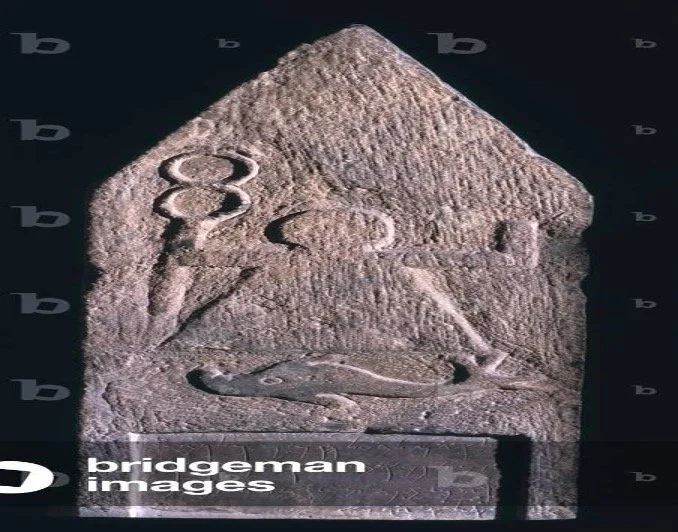
Fig. 5. Source: World History Encyclopaedia. https://www.worldhistory.org/image/5286/tanit/.
This visual configuration encodes multiple layers of meaning: the disc or head signifies divine oversight, the horizontal arms evoke cosmic balance, and the triangle suggests the generative and interconnected nature of life. Taken together, these elements produce a symbolic system that transcends a purely gendered representation, as becomes evident when meaning arises from the interplay of the triangle, the head, and the outstretched arms rather than from the triangle alone. From this more expansive perspective, Tanit emerges as embodying order, continuity, and universal harmony, extending her symbolic resonance to both men and women and helping explain her remarkably widespread worship across the Mediterranean.
This polyvalent symbolism finds a clear resonance in Amazigh textile practices, where geometric abstraction similarly encodes layered meanings related to balance, continuity, and the interrelation of human, natural, and cosmological orders. In these practices, the careful arrangement of triangles, horizontal and vertical lines, and circles quietly echoes Tanit iconography, suggesting protection, fertility, and harmony.[23] Through these motifs and graphic practices, Amazigh artisans and inscribers preserved and reinterpreted Tanit’s legacy, embedding principles of guardianship, fertility, and cosmic balance into both textile and written forms—a symbolic inheritance that continues to shape and inspire contemporary Amazigh identity and artistic practice. This foundational symbolism establishes a framework for understanding how geometric forms transmit cultural memory across generations.
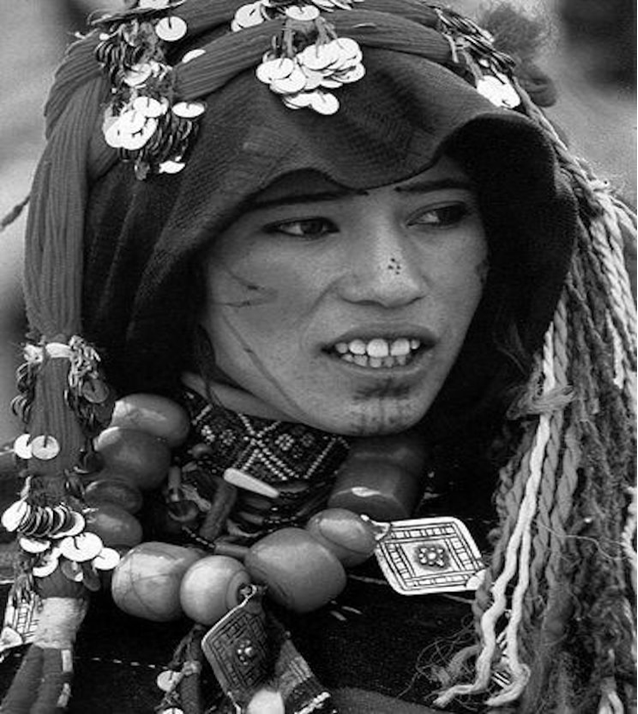
Fig. 6. Source: Morocco World News website. Accessed September 2, 2025.
Remarkably, although Amazigh textile designs have evolved over the centuries, their fundamental geometric elements—triangles, diamonds, and lines—have remained largely consistent. In parallel, although pre-standardized Tifinagh forms exhibit significant graphic variability, with letter shapes differing across regions, sites, and individual inscriptions, reflecting localized adaptations shaped by materials, engraving techniques, and contextual practices, they maintained coherence, a fact which underscores the script’s embeddedness in lived practice and its responsiveness to environment and medium. In both cases, such enduring patterns invite further exploration of the dialogue between material culture and written expression in Amazigh society.
At a more abstract level, the connection between Amazigh textile designs and the Tifinagh script represents a continuous expression of Amazigh beliefs and cosmology, transmitted across generations and communities through an evolving cultural process. Although both textile patterns and the Tifinagh script have undergone transformations over time, they retain core symbolic elements that reflect a worldview in which the sacred and the everyday are deeply intertwined. In the absence of extensive documentation on Amazigh religious practices, these designs provide vital sources for scholars seeking to understand how Amazigh communities articulate their spiritual experiences, bridging artistic and linguistic forms of expression. This intersection of art and language underscores the ways in which visual and written symbols preserve and convey collective cultural knowledge. Many of the symbolic motifs found in Amazigh textile patterns also appear in traditional tattoos and jewellery, as illustatred in Figure 6.
Amazigh traditional commemorative tattoos, as well as pieces of jewellery, incorporate solar symbols, indicating a profound and enduring reverence for the sun that persists culturally, even if it no longer holds explicit religious significance. With the advent of Islam in the seventh century, these practices underwent significant transformations, as new religious frameworks and social norms curtailed certain ritual uses of tattoos and shifted the symbolic meanings of existing motifs. Other tattoos, such as those traditionally inscribed on the bodies of prospective daughters-in-law within certain ancient Amazigh communities, serve as enduring markers of personal and social history.[24] Furthermore, tattoos operate within semiotic frameworks, functioning as systems of signs whose meanings are culturally encoded and recognized within specific social contexts, analogous to the structures of written language systems. Consequently, tattoos can be understood as a form of codified visual language, embodying complex layers of symbolic communication that articulate identity, status, and cultural memory, serving as living repositories of cultural memory and social identity that link past practices to contemporary life.
This continuity is also reflected in the visual grammar of other forms of material culture such as architecture:
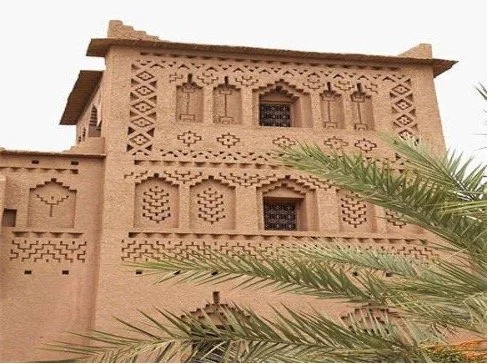
Fig. 7. Source: Art Travel Morocco. 2025. The Berber Kasbahs of Morocco: History, Architecture, and Construction Techniques. Art Travel Morocco. https://arttravelmorocco.com/the-berber-kasbahs-of-morocco-history-architecture-and-construction-techniques
Figure 7 shows a traditional Amazigh kasbah (fortified Amazigh house) characterized by its earthy, reddish-brown adobe walls that harmonize with the surrounding landscape. The structure features tall, rectangular towers with minimal openings, often capped with crenelations or stepped designs that echo geometric patterns found in Amazigh textiles. The walls are typically adorned with simple linear or triangular motifs, carved or painted, reflecting cultural symbols of protection and fertility. The overall composition emphasizes verticality and symmetry, while the use of natural materials and integration with the terrain demonstrates the Amazigh aesthetic principle of blending built forms with nature, creating a structure that is both functional and deeply expressive of cultural identity.
Like tattoos, the architectural designs reveal a persistent visual and semiotic grammar that structures diverse forms of Amazigh material culture. These motifs do not merely decorate; they actively communicate cultural values, social identities, and cosmological principles. By repeating geometric forms such as lozenges, triangles, and zigzags across different media, Amazigh artisans encode protective functions, signal fertility, and map social and ancestral networks. This circulation of motifs across textiles, tattoos, jewellery, and architecture demonstrates how visual symbols operate as connective threads—linking domestic spaces, the human body, and communal life—while maintaining continuity in the cosmological and social imagination of Tamazgha, highlighting the deep interconnectedness of Amazigh visual culture and the continuity of symbolic expression.
From the perspective of this paper, Amazigh tattoos and architectural designs employ a shared symbolic language that functions like writing, using geometric motifs and abstract forms to communicate personal, social, and cultural meanings. Tattoos inscribe triangles, zigzags, or dots onto the skin, permanently recording identity, memory, and belief, while architects replicate similar patterns in kasbahs, doorways, and façades to convey protection, fertility, and communal values. Both tattoos and architectural motifs demand interpretation, often drawing on metaphor, cultural allusion, and layered significance, and they actively preserve individual and collective histories. In this way, Amazigh tattoos and architecture operate as parallel communicative systems, where visual patterns serve as codified texts embedded within cultural practice.
From the perspective of this paper, while weavers embedded geometric motifs and abstract forms in textiles, tattooers inscribed them onto the skin, and architects replicated these patterns in kasbahs, doorways, and façades, creating enduring records of personal and communal histories. This correspondence demonstrates how Amazigh communities integrated utilitarian, sacred, and mnemonic functions, expressing abstract concepts and lived experiences through repeated motifs across multiple media. By structuring knowledge, reinforcing social cohesion, and sustaining cosmological understanding, these visual patterns naturally extend into the linguistic dimension of Tifinagh, revealing how the symbolic and geometric principles of Amazigh material culture actively inform writing and textual communication.
Amazigh Textile Designs and the Tifinagh Script: The Linguistic Dimension
Scholars generally treat what is referred to as Amazigh rock art as a key point of entry into the linguistic dimension of textile designs. This art is distributed across a broad transregional landscape that includes the central Saharan zones as well as Atlantic and Mediterranean extensions. It is most prominently found in Morocco, Algeria, and Libya, with major concentrations in the Sahara and adjacent mountain ranges, and extends into Tunisia, Niger, and Mali, forming a continuous Saharan cultural zone[25]. It also appears in the Canary Islands, where engravings and Libyco-Berber inscriptions are linked to the indigenous Guanche populations of Amazigh origin[26], and along the Mediterranean fringe of North Africa—including coastal and sub-coastal regions of Morocco, Algeria, and Tunisia—with further extensions into the Western Desert of Egypt. Together, these regions illustrate the wide geographical spread and cultural continuity of Amazigh rock art traditions across the Sahara, the Mediterranean, and the Atlantic margins.
Abdellah Salih[27] provides an early and foundational synthesis of Moroccan rock art, foregrounding issues of heritage, preservation, and cultural continuity. His work documents a wide range of sites and emphasizes their regional diversity while situating them within broader Amazigh cultural landscapes. Salih focuses on the mechanisms through which visual traditions endure over time—through preservation, reinterpretation, and transformation across media. He argues that motifs found in rock art do not remain fixed in their original contexts but may also be transposed into other expressive forms, including textiles, body ornamentation, and architectural decoration. By framing rock art as part of a living heritage, he highlights the persistence and adaptability of symbolic systems, even in the absence of continuous written records, and underscores their potential linguistic or semiotic dimensions.
Building on this foundation, Susan Searight[28] develops a more explicitly analytical framework that examines Amazigh rock art as a structured system of visual communication. She analyzes recurring motifs—geometric figures, anthropomorphic forms, and symbolic markings—in relation to their spatial distribution, chronology, and cultural context. Through this approach, Searight demonstrates that these motifs operate according to a coherent visual logic, encoding meaning through repetition, variation, and compositional rules. Her comparative perspective further opens the possibility of aligning these visual patterns with other symbolic systems, particularly Amazigh textile designs, where similar geometric configurations function within equally structured frameworks. In doing so, she advances the argument that such motifs may have served mnemonic or proto-notational purposes, thereby strengthening the link between visual symbolism and emerging linguistic expression.
Taken together, Salih and Searight offer complementary but distinct contributions to the study of Amazigh rock art. Salih’s work establishes a crucial empirical and heritage-oriented foundation by documenting sites and emphasizing the continuity and transmission of visual traditions across time and media. However, his approach remains primarily descriptive and less focused on the internal structure of the motifs themselves. In contrast, Searight advances a more analytical and interpretive framework, demonstrating how these motifs operate within a structured visual logic that may encode meaning and support mnemonic or proto-notational functions. While Salih foregrounds cultural persistence, Searight deepens the theoretical understanding of how symbolic systems function, making her approach particularly valuable for exploring connections between visual forms and linguistic expression. Figures 8-11 constitute a sample of such art:
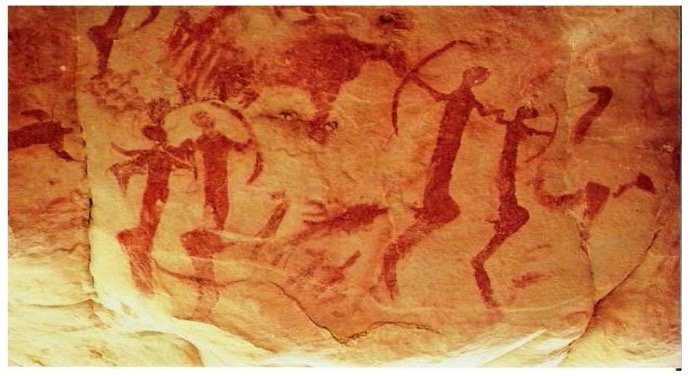
Fig. 8. Source: Aounate Azguer painted panel, Susan Searight. “Sites with Paintings in Morocco and the Atlantic Sahara” Arts 6, no. 3: 9. (2017): https://doi.org/10.3390/arts6030009
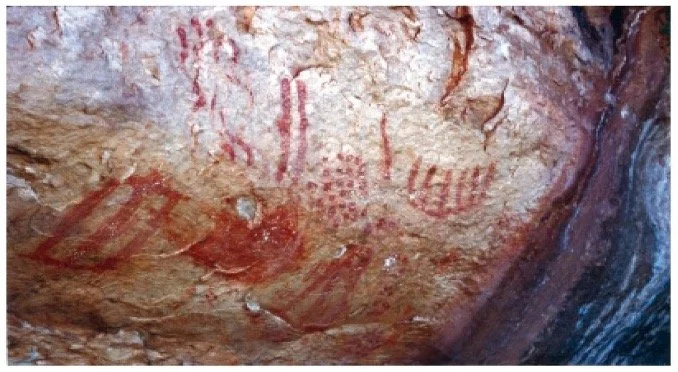
Fig. 9. Source: Ifrane-n-Taska (South-west of Zagora, Morocco) Searight “Sites with Paintings in Morocco and the Atlantic Sahara.”
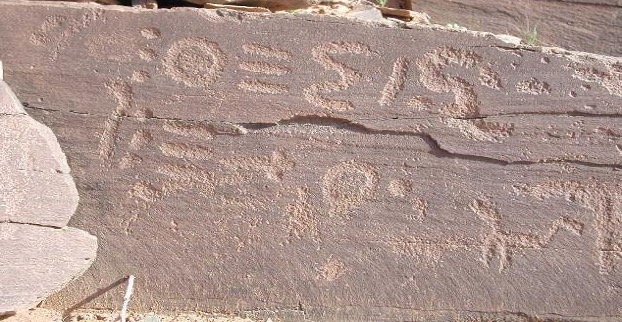
Fig. 10. Source: Ifrane-n-Taska (South-west of Zagora, Morocco) Searight “Sites with Paintings in Morocco and the Atlantic Sahara.”
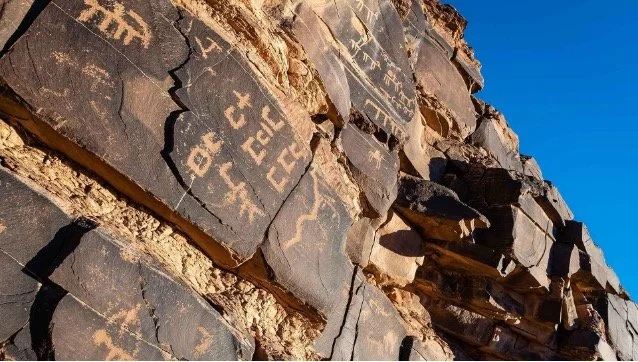
Fig. 11. Source and date: The site Ifran-n-Taska (Eastern Jbel Bani, Morocco) is described in a 2010 Moroccan-Italian research project with Nami among the authors, with first field-work in October 2009.
The images shown in figures 8-10 above juxtapose writing (inscriptions) and pictorial design within the same visual field, providing compelling evidence for a conceptual linkage between textile motifs and script. They depict human figures, domestic cattle, wild animals, and letter forms coexisting within integrated compositions. The use of vivid pigments, figurative scenes, and abstract motifs underscores the multilayered nature of Amazigh visual culture, revealing a complex semiotic system in which meaning emerges through combination, repetition, and transformation of forms. Amazigh rock art, encompassing both painted and engraved inscriptions, constitutes a corpus that attests to the antiquity and geographical breadth of Amazigh presence while preserving their linguistic heritage. Although references remain limited, recent advances in linguistics, anthropology, and archaeology have deepened our understanding and addressed longstanding gaps regarding the Amazigh language and its ancestral script.
These visual and textual sources together provide a rich foundation for exploring the intersections of textile motifs, inscriptions, and linguistic expression. Yet, despite this analytical potential, linguistic research on the relationship between Amazigh textile designs and language remains limited, with the most substantive studies to date being those of Skounti et al.[29] Skounti and colleagues[30] analyze Libyco-Berber inscriptions from rock art sites, demonstrating that early Amazigh graphization was deeply embedded within visual and material environments and highlighting the value of interdisciplinary collaboration between linguistics and archaeology. Building on this foundation, El Haloui, Ouhra, and Si Mhamdi[31] examine a geocontourglyph in Sidi Jafaar, tracing its linguistic and cultural significance across North Africa and showing how inscriptions and material forms intersect within broader historical and social contexts. El Guabli[32] complements these studies by historicizing the concept of Tamazgha and positioning linguistic and visual practices within a theoretical framework that links cultural identity, material production, and social organization. Together, these works establish a coherent research trajectory: Skounti et al.[33] provide epigraphic and linguistic evidence, El Haloui, Ouhra and Si Mhamdi extend this evidence geographically and contextually, and El Guabli situates these findings within the broader conceptual and cultural category of Tamazgha. I draw on this integrated, interdisciplinary methodology to explore the connections between the artistic and linguistic dimensions of Amazigh textile motifs, demonstrating how in addition to social identity and collective memory, these motifs actively encode linguistic knowledge.
The works of Skounti et al.[34] and Skounti and Lemjidi[35] are particularly relevant to the present discussion, as they focus primarily on inscriptions rather than purely pictorial forms of rock art. Their interdisciplinary methodology—integrating linguistic analysis with archaeological investigation—aligns closely with this study’s objective of examining the relationship between textile motifs and language. These contributions provide a critical point of departure for research within Amazigh rock art traditions, particularly for inquiries aimed at uncovering the interplay between visual symbolism and linguistic expression. Skounti et al.’s emphasis on epigraphic material and the linguistic encoding of meaning in visual forms offers a valuable framework for exploring how similar dynamics may be reflected in Amazigh textile design.
According to Skounti et al.[36], Amazigh rock art dates back several millennia and frequently depicts animals such as cattle, elephants, and giraffes—reflecting a period when the Sahara was considerably greener—alongside human figures, weapons, chariots, and symbolic motifs. Many of these engravings are interpreted as representations of daily life, spiritual beliefs, or tribal identity (Ibid). The Tassili n’Ajjer plateau in Algeria stands out as one of the most extensively studied sites, containing thousands of petroglyphs and pictographs that offer valuable insights into early Amazigh culture and the region’s environmental transformations. Beyond serving as a cultural and historical record, this rock art underscores the Amazigh people's profound connection to their land and heritage.
Building on the cultural and symbolic insights provided by Amazigh rock art, interpreting these inscriptions requires situating them within specific historical and geographical frameworks.[37] The extensive temporal scope of this rock art often spans multiple, undocumented historical periods, prompting scholars to adopt interdisciplinary methods for nuanced interpretation. Within this context, Skounti et al.[38] identify a significant graphic relationship between the Amazigh alphabet and epigraphy—the study of inscriptions engraved on durable materials such as stone, metal, or pottery—and treat rock art as a form of language, analyzing its content, historical context, and cultural significance. To facilitate such analysis, they categorize rock forms into “distinct images/paintings” and “signs,” allowing systematic comparison of motifs across specific Amazigh regions. They further employ “periodization,” classifying inscriptions within recognized historical phases, which proves essential for situating symbols within the broader chronology of rock art; for example, the categorization associated with the emergence of horses and chariots, coinciding with the presence of giraffes in the Sahara, contrasts with later periods marked by camels or ostriches. Together, these approaches provide a robust framework for examining the interplay between visual symbolism and linguistic expression in Amazigh material culture.
The initial outcome of the corpus categorization and periodization undertaken in the 2003 study of Amazigh archaeological sites is that the Tifinagh script originally combined symbolic characters (signs) with pictorial representations (images). Careful comparison of these elements allowed the authors to argue that the script experienced a gradual process of abstraction, leading to a progressive simplification of its epigraphic and visual components. The specific mechanisms and precise dynamics of this evolutionary transition lie beyond the scope of the present discussion. It is sufficient here to note that historical and semiotic developments guided the transformation of Tifinagh from its early iconic forms into a more systematized script, identified in the study as “tirra” (writing), which also serves as the title of the publication.
A second outcome of the authors’ classification of the corpus into images and signs lies in their analysis of the linear elements that accompany these forms. They identify the predominance of linear components—particularly horizontal lines—as preceding the incorporation of dots as a formal graphic feature. This diachronic sequencing highlights a progressive increase in linguistic complexity and structural differentiation within the script. In support of this interpretation, the authors argue that Amazigh characters composed primarily of linear elements are indicative of earlier inscriptional traditions, whereas dot-based characters correspond more closely to ancient Saharan variants of the script:[39]
1.The line in ancient Libyc alphabet transited into a dot-based Saharan alphabet, named “Tifinagh Saharien” (Saharan Tifinagh).
2. There was a contact zone between the two alphabets, that is the ancient Libyc and Saharan Tifinagh. For example, the sites that are close to the High Atlas in Morocco use only Libyc characters.
3. A regional phonetic specialization of some characters through recourse to characters belonging to various historical periods.
This chronological distinction finds further support in broader linguistic conventions, wherein dots typically function as diacritical marks—supplementary signs positioned above or below graphemes—as exemplified in the International Phonetic Alphabet (IPA). Importantly, the incorporation of dot elements has not supplanted linear forms; rather, the persistent prevalence of lines underscores their enduring centrality within the script’s graphic structure. Taken together, these observations reinforce the central argument of this section, which emphasizes the persistence of linear motifs as foundational components of the semiotic system of the Tifinagh script.
Scholars across linguistics, semiotics, and anthropology conceptualize writing as a hierarchical system composed of multiple structural layers, in which smaller units aggregate into increasingly complex configurations. Ignace Gelb[40], Walter J. Ong[41], and Jack Goody[42] each emphasize the stratified organization of writing systems and demonstrate how elementary graphic units combine to produce higher-order structures of meaning. Their analyses show that scripts evolve through the systematic recombination and stabilization of basic forms, thereby acquiring increased semantic range and functional complexity. This theoretical framework supports the interpretation of Tifinagh as a layered semiotic structure, in which foundational graphic elements—such as lines and dots—function as integral components within an organized and hierarchically structured system of signification.
Within this theoretical perspective, the notion of clustered units provides a useful bridge between abstract models of writing and their material manifestations. Writing systems do not operate solely at the level of isolated signs; rather, they organize these signs into patterned groupings that reflect both structural principles and shared conventions. In this regard, Skounti et al.[43] offer a concrete illustration through their identification of distinct ensembles graphiques (graphic clusters) within the material culture of the High Atlas. Their analysis documents the recurrence of a specific graphic cluster across three non-adjacent archaeological sites—Oukaimeden, L3zib n ikkis, and Oussikis—each of which exhibits clearly Libyco-Amazigh characters devoid of dot elements. This distribution suggests the existence of a shared symbolic or communicative system that transcended local boundaries and contributed to a broader regional coherence in graphic expression.
In addition to their analysis of lines and dots, Skounti et al.[44] examine individual characters within the corpus of Amazigh rock art, thereby extending their inquiry from graphic components to graphemic units. Linguistic theory establishes that the development of any alphabet—or language more broadly—inevitably produces both variable and invariable elements, as demonstrated by William Labov[45] and David Lightfoot.[46] Building on this principle, Aghali-Zakara[47] shows that, within the Amazigh language, a single grapheme may correspond to one or multiple phonetic values depending on its regional context of use. Skounti et al.[48] draw on this insight to identify a set of characters in their rock art corpus that exhibit such variability.
These findings demonstrate that the Tifinagh script exceeds the bounds of purely artistic expression and operates as a flexible and functional linguistic system capable of encoding a wide range of communicative meanings. In its contemporary form, Tifinagh enjoys broad recognition and active use, serving as a medium for poetry, literary production, and extended narrative forms such as novels. Its continued vitality confirms its central role within the cultural, linguistic, and literary landscape of Amazigh societies.
This observation brings the argument full circle by reconnecting the graphic features identified in rock inscriptions with earlier Amazigh textile-based designs that date back to antiquity. Rather than existing as separate domains, these visual and symbolic practices participate in a shared continuum of expression, in which motifs and structures circulate across media. At this juncture, a critical question emerges: to what extent has the Amazigh writing system been used, and how has its functional scope evolved across different historical and cultural contexts?
The Tifinagh script has maintained a selective yet enduring presence across North Africa, inscribed into stone and memory as a marker of Amazigh identity across centuries. Although its use in everyday communication was limited, it found strategic expression in elite contexts, appearing on tombstones of tribal leaders and in intimate Tuareg correspondence, including love letters[49]. These inscriptions, often intertwined with imagery, trace the unfolding of cultural practices over time. Early depictions show warriors clad in wide tunics, carrying javelins, and adorned with bi-triangular feathers—a visual language that precedes later representations of warriors wielding swords and dressed in seroual –the traditional wide trousers of North Africa. In parallel, the antelope motif of the Tazina rock art style from Antiquity stands alongside an inscription containing five Tifinagh characters, linking symbolic representation of fauna to early textual practice.[50] Viewed together, these textual and visual traces tell a story of selective but remarkably persistent continuity, revealing how Tifinagh functioned as a medium for memory, cultural identity, and communication. Even when its use was confined to ceremonial or personal contexts, the script maintained a historical thread that connected past and present, embodying the Amazigh community’s ongoing engagement with writing, symbolism, and visual expression.
Having linked writing to rock art, scholars next sought to demonstrate that image-based writing originated locally in North Africa. In this context, Hachid[51] and Ouachi[52] contend that linguists first substantiated this claim by tracing the connections between image-based and character-based writing across the longue durée. From this perspective, Hachid emphasizes:
Before adopting Punic and Latin, the Imazighen had already developed writing systems, likely in the contexts most accessible to them—notably, in regions where they were already conveying meaning through figurative imagery at rock art sites. This suggests that the practice of visual expression in rock art provided both the medium and conceptual foundation for the emergence of local writing systems.[53]
This statement suggests that the Amazigh people initially communicated through visual imagery before the adoption of a formal writing system. Crucially, this observation supports the hypothesis that the Amazigh language may have preceded the emergence of rock art as a means of expression, indicating that linguistic structures were likely already in place before symbolic or pictographic representations developed. The author’s subsequent clarification further reinforces this interpretation, highlighting the foundational role of language in shaping early modes of visual and symbolic communication.
The creation of Amazigh writing is closely intertwined with the most distinctive feature of Amazigh identity across North Africa, from the Atlantic Ocean to the Gulf of Syrtes: geometric graphic design. First emerging with the Capsian civilization, this visual style provided a conceptual and aesthetic foundation for writing and continues to shape traditional arts today, demonstrating a remarkable continuity of form and cultural expression.[54]
In accordance with its transformative role in visual culture, as discussed in the section on rug designs and their meanings, Hachid[55] emphasizes that the advent of Islam in North Africa provoked a major sociopolitical and cultural upheaval, fundamentally reorganizing religious, linguistic, and administrative structures across the region. This shift not only altered the frameworks through which visual and material culture were produced and circulated but also influenced the ways in which Amazigh communities adapted, preserved, and reinterpreted their symbolic and artistic traditions under new religious and administrative contexts. As Arab armies expanded their influence, they introduced new legal, political, and linguistic norms, exerting considerable pressure on Amazigh communities, particularly in urban centers and accessible territories. In response, the Tuareg strategically withdrew to the more remote and inhospitable regions of the Sahara and Sahel, deliberately creating a buffer that allowed them to maintain cultural autonomy. Through this relocation, they preserved the Amazigh writing system, ensuring the continued use of Tifinagh despite pervasive Arabization. Rather than passively enduring historical change, these communities acted as deliberate custodians of their linguistic and symbolic heritage, demonstrating that the survival of their writing system stemmed from intentional strategies of cultural resilience. This episode illustrates how the arrival of Islam, while transformative, simultaneously triggered localized efforts to protect and perpetuate Amazigh identity, laying the groundwork for the endurance and later revival of Tifinagh across centuries.
By actively safeguarding their linguistic and symbolic heritage, Amazigh communities ensured the continued use of Tifinagh as a functional writing system, even amid the cultural and political dominance of Arab-Islamic institutions. Hélène Claudot-Hawad[56] notes that medieval Arab historiographers took considerable interest in Tifinagh texts, examining them primarily from legal and religious perspectives. Bounfour[57] emphasizes that many of these works—including Berber Qur’ans, religious writings, and Qanuns (laws)—were composed in the Amazigh script rather than in Arabic. This deliberate choice demonstrates that Amazigh authors consciously preserved their linguistic and symbolic identity, encoding critical religious, legal, and literary knowledge in their indigenous script. Galand-Pernet[58] further identified at least twelve such texts housed in the Rabat Bibliothèque Générale, confirming that Tifinagh functioned as an active medium for intellectual and spiritual life, not merely as a symbolic or decorative form.
The continuity of Tifinagh in these manuscripts lays the foundation for its modern revival, which first emerged among Amazigh diaspora communities in France before gaining momentum in Morocco, where Neo-Tifinagh appears in educational, literary, and artisanal contexts. Just as the Tuareg and other Amazigh communities preserved the script centuries ago, contemporary communities actively integrate Tifinagh into textiles, signage, and digital media, asserting an unbroken thread of linguistic and cultural identity. Over subsequent centuries, scholars increasingly drew on these manuscripts in regions beyond the Tuareg heartlands—including Sous, Kabylia, Nfoussa, and Mauritania[59]—extending the reach and influence of Tifinagh across North Africa.
As with all human languages, the Amazigh writing system has been shaped and enriched over many centuries through contact with other linguistic traditions, most notably Punic and Arabic. Nevertheless, the primacy of the script was never seriously threatened, enabling its survival. This continuity reinforces the historical connection between writing and weaving: while weaving appears to have preceded writing, the Tifinagh script is considered one of the earliest known phonetic writing systems, potentially predating the Phoenician alphabet and originating in the second millennium BCE.[60] Such evidence situates Tifinagh within a broader narrative of script development and underscores its potential role in the pre-alphabetic symbolic evolution of human communication. In contemporary times, Tifinagh has undergone gradual standardization and formal development, eventually becoming officially institutionalized in both the Maghreb and among Amazigh diaspora communities in Europe. Below, I present an example of how this institutionalization is manifested in Morocco.
The Institutionalization of Neo-Tifinagh in Morocco
Building on pre-standardized Tifinagh forms, IRCAM’s[61] standardization produced Neo-Tifinagh, a modern, codified script for education, print, and digital use. Its adoption goes beyond technical innovation, serving as a deliberate cultural and political statement. Debates over the script—often framed as the maʿrakat al-ḥarf (“battle of the letter”)—reveal persistent tensions surrounding identity, recognition, and linguistic authority. By choosing Tifinagh over Arabic or Latin scripts, Amazigh communities actively assert a distinct visual and cultural presence, connecting contemporary literacy to ancestral writing practices and reinforcing continuity with historical Amazigh expression.
Reinforcing continuity with historical Amazigh expression, Morocco officially adopted Neo-Tifinagh on 10 February, 2003 through a royal decree, designating it as the official script for writing Tamazight. Under IRCAM’s guidance, the state subsequently introduced the script into primary school curricula, integrating Amazigh language instruction into public education. Here is a sample of neo-Tifinagh:
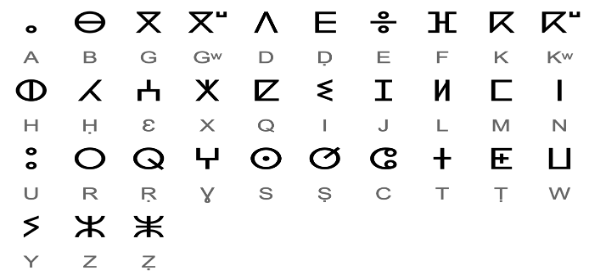
Fig. 12. Source: Institut Royal de la Culture Amazighe (IRCAM) chart of the Neo-Tifinagh alphabet, 2004.
As Figure 12 illustrates, Neo-Tifinagh marks a shift from earlier Tifinagh forms toward a standardized and regulated system. The script privileges clarity, symmetry, and formal consistency, aligning its visual structure with the demands of literacy, pedagogy, and institutional use. In contrast, earlier Tifinagh forms exhibit significant graphic variability: letter shapes differ across regions, sites, and individual inscriptions, reflecting localized adaptations shaped by materials, engraving techniques, and contextual practices. These earlier forms integrate aesthetic and symbolic dimensions, in which visual balance, symmetry, and patterning carry meaning alongside communicative function, and they operate within a flexible semiotic framework that permits multiple representations of similar signs.
This transformation signals a functional reorientation. Whereas earlier Tifinagh forms blur the boundary between writing and visual expression, Neo-Tifinagh consolidates the script’s role as a linguistic system by prioritizing legibility and uniformity. The Neo-Tifinagh system nonetheless retains core geometric features—linear strokes, angular forms, and dot-based configurations—thereby preserving continuity in the script’s underlying visual logic.
Conclusion: Circling Back to the Initial Argument
This paper suggests that Amazigh textile designs may have served not merely as decorative forms but as a formative visual system, potentially influencing the emergence of writing and the development of the Tifinagh script. The progression from abstract textile motifs to structured rock art and eventually to Tifinagh letters and the Neo-Tifinagh script indicates that Amazigh literacy could have emerged from a closely intertwined visual and material culture.
This historical continuity persists in contemporary practice, as Neo-Tifinagh increasingly appears in textile production, echoing ancient patterns established in earlier generations. Figure 13 illustrates process:
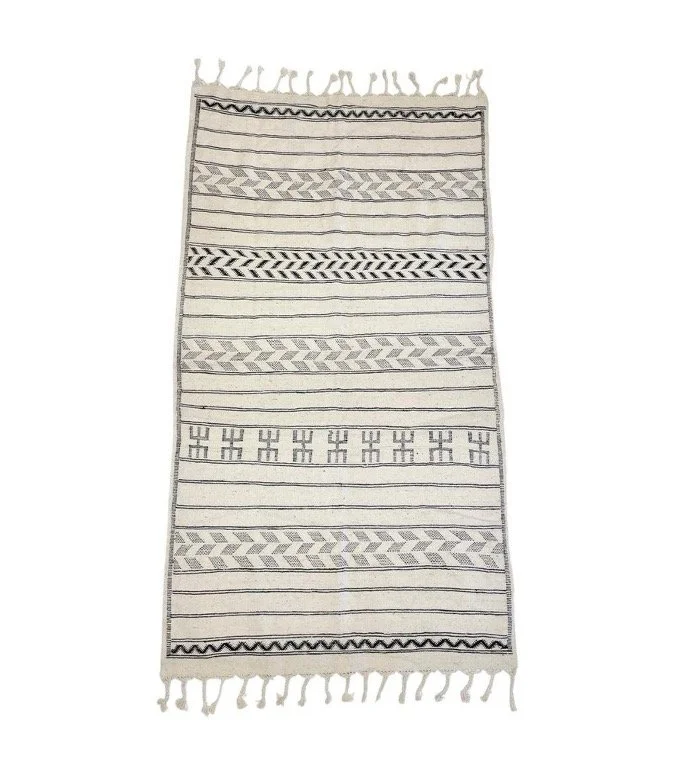
Fig. 13. Source: Kantara Rugs (commercial collection of Moroccan flatweaves) https://kantararugs.com/products/r945-modern-moroccan-tifinagh-letter-flatweav.
The rug in Figure 13 displays linear geometric motifs that, while not exact Neo-Tifinagh letters, subtly echo their forms, creating a visual conversation between pattern and script. By deliberately embedding legible Tifinagh characters within these motifs, women weavers link contemporary weaving to the enduring Amazigh practices of encoding knowledge, beliefs, and identity, ensuring that cosmology and cultural memory continue to resonate across generations.
In conclusion, while the question posed in the title—Could weaving be the ancestor of Amazigh writing? —remains open to interpretation, this paper argues for a cautious affirmation. It advances a twofold claim: the connection between weaving and the Tifinagh script is not only cultural but also formal in the linguistic sense, as both constitute systems that rely on structured, rule-governed arrangements of discrete signs to encode and transmit meaning. As woven designs appear to have preceded the script, they may be regarded as a precursor that informed the script’s graphic and semiotic structure, suggesting that Amazigh weaving provided the conceptual and symbolic foundation upon which the Tifinagh script later developed. This perspective explains the remarkable persistence of the Amazigh language despite the historically limited use of its alphabet. Rooted in artistic and symbolic practice rather than conventional literacy, the Tifinagh script demonstrates that a language whose alphabet falls into disuse can nonetheless survive. Amazigh has endured for millennia and continues to thrive, exemplifying the resilience of a language sustained through cultural and creative expression. Ultimately, the Amazigh case demonstrates that a language’s survival and vitality may depend as much on artistic and cultural practice as on conventional literacy, revealing the profound interconnections between creativity, symbolism, and linguistic endurance.
Bibliography
Agbe-Davies, Anna. “Rock Art and Oral Traditions: A Methodological Approach.” Journal of African Archaeology 5, no. 1 (2007): 1–20.
Aghali-Zakara, Mohamed. “À Propos Des Signes Libyco-Berbères Énigmatiques Sahariens, Sahéliens et Canariens. ”Aguayro no. 6 (2001): 6-10.
Alvarez, Nilda Callañaupa. Weaving in the Peruvian Highlands: Dreaming Patterns, Weaving Memories. Thrums Llc, 2013.
Al-Wazzan, al-Hasan. The History and Description of Africa. Translated by Pory John. 1550; London: Hakluyt Society, 1896.
Amazighes. Cycles, parures, motifs. Marseille: Musée des Civilisations de l’Europe et de la Méditerranée, 2025.
Baker, Patricia L. Islamic Textiles. London: British Museum Press, 1995.
Barber, Elizabeth J. W. Prehistoric Textiles: The Development of Cloth in the Neolithic and Bronze Ages with Special Reference to the Aegean. Princeton NJ: Princeton University Press, 1992.
Becker, Cynthia J. Amazigh Arts in Morocco: Women Shaping Berber Identity. Austin: University of Texas Press, 2010.
Blair, Sheila, Jonathan Bloom, and Richard Ettinghausen. The Art and Architecture of Islam 1250-1800. New Haven CT: Yale University Press, 1994.
Bounfour, Abdellah. “Manuscrits Berbères (En Caractères Arabes).” Encyclopédie Berbère 30 (2010): 4554–63. https://doi.org/10.4000/encyclopedieberbere.448.
Brett, Michael, and Elizabeth Fentress. The Berbers. Repr. The Peoples of Africa. London: Blackwell, 2002.
Camps, Gabriel. “Tifinagh.” In Encyclopédie Berbère, vol. 32, edited by Gabriel Camps. Aix-en-Provence, Edisud: 1996.
Casajus, Dominique. “Déchiffrages. Quelques Réflexions Sur l’écriture Libyco-Berbère.” Afriques, 2011. https://doi.org/10.4000/afriques.688.
Chaker, Salem, and Slimane Hachi. “À Propos de l’origine et de l’âge de l’écriture Libycoberbère, Études Berbères et Chamito-Sémitiques.” In Études Berbères et Chamito-Sémitiques, Ed. Chaker, Zaborski, Prasse. Paris: Peeters, 2000.
Cheek, William Mead. “The Origins and Development of Textile Writing in Peru.” Master’s thesis, University of New Mexico, 2020. ttps://digitalrepository.unm.edu/arth_etds/95.
Claudot-Hawad, Hélène. Habiter Le Désert: Les Touaregs de l’Ahaggar Photographiés Par Marceau Gast – 1951-1965. Paris: Non-Lieu, 2021.
El Guabli, Brahim. Moroccan Other-Archives: History and Citizenship after State Violence.. New York: Fordham University Press, 2023.
El Haloui, Abdelah, Abdelmajid Ouhra, and Hicham Si Mhamdi. “A Geocontourglyph for Gypsum in Sidi Jafaar.” Tamazgha Studies Journal 3 (Spring 2025). https://static1.squarespace.com/static/6515b87f2af0cc4746f62fbc/t/6835e925d690a765e7cec7ce/1748363561466/6_ElHaloui-Spring2025.pdf.
El Mansour, Mohammed. Morocco in the Reign of Mawlay Sulayman. Wisbech: Middle East & North African Studies Press, 1990.
Galand-Pernet, Paulette, Essai sur la littérature des Berbères. Paris: Klincksieck, 1972.
Gallinaro, Marina. “Saharan Rock Art: Local Dynamics and Wider Perspectives.” Arts 2, no. 4 (2013): 350–82. https://doi.org/10.3390/arts2040350.
Gelb, Ignace J. A Study of Writing. Rev. ed., Chicago: University of Chicago Press, 1974.
Goody, Jack, The Logic of Writing and the Organization of Society. Cambridge: Cambridge University Press, 1986.
Grabar, Oleg. The Mediation of Ornament: The A. W. Mellon Lectures in the Fine Arts, 1989. Princeton NJ: Princeton University Press, 1992.
Hachid, Malika. Les Premiers Berbères Entre Méditerranée Tassili et Nil. Aix-en-Provence: Edisud, 2001.
Hamès, Constant. “Maurice Lombard, Les Textiles Musulmans Du VIIe Au XIIe Siècle" Archives de Sciences Sociales Des Religions 122 (2003): 59–157, https://doi.org/10.4000/assr.1270.
Ibn Khaldoun, Abdurahman. Tarikh Ibn Khaldoun. Vol. 6. Dar Al Fikr, 2000.
Ingold, Tim. Lines: A Brief History. London: Routledge, 2007.
Jeppie, Shamil. Writing Timbuktu: The Book in West African History. Princeton NJ: Princeton University Press, 2026.
Jeppie, Shamil. “Writing, Books, and Africa.” History and Theory 53.1 (2014): 94-104.
Jørgensen, Lise Bender, Antoinette Rast-Eicher, and Willeke Wendrich. “Earliest Evidence for Textile Technologies” Paléorient 49–1 (2023): 213–28. https://doi.org/10.4000/paleorient.2479.
Khatibi, Abdelkebir. La mémoire tatouée: autobiographie d’un décolonisé. Paris: Denoël, 1971.
Laroui, Abdallah. The History of the Maghrib: An Interpretive Essay. Translated by Ralph Manheim. Princeton NJ: Princeton University Press, 2016.
Labov, William. Principles of Linguistic Change. 1: Internal Factors. London: Wiley-Blackwell, 2010.
Lightfoot, David. The Development of Language: Acquisition, Change, and Evolution. London: Blackwell, 1999.
Mernissi, Fatima, “The Woman Behind the Carpet,” in Femmes et Leurs Droits. Ed. Fatima Sadiqi. Mohammedia: Imprimerie Fedala, 2006.
Myntti, Cynthia. Moroccan Textiles. London: Thames & Hudson, 1994.
Nagi, Salima. Art et architectures berbères du Maroc: atlas et vallées présahariennes. Aix-en-Provence: Édisud, 2001.
Nagi, Salima. Greniers Collectifs de l’Atlas : Patrimoine Du Sud Marocain. Aix-en-Provence: Edisud, 2006.
Oliver, Paul, ed. Encyclopedia of Vernacular Architecture of the World. Cambridge: Cambridge University Press, 1997.
Ong, Walter J. Orality and Literacy: The Technologizing of the Word. London: Routledge, 1982.
Ouachi, Mustapha. Judhur Ba’D Madhahir al-Hadara al-Amazighiyyah Khilal ‘uSur Ma Qabla al-Tarikh (The Roots of Some Aspects of the Amazigh Civilization During the Pre-Historical Eras). Tariq Ibn Ziyad. Rabat, 2004.
Sadiqi, Fatima. “Women in Morocco.” In Oxford Research Encyclopedia of African History. Ed. Thomas Spear. New York: Oxford University Press, 2024. https://doi.org/10.1093/acrefore/9780190277734.013.1232.
Salih, Abdellah. “L’art Pré- et Protohistorique Au Maroc : Essai de Synthèse” Préhistoire Anthropologie Méditerranéennes (2003): 39–53.
Searight, Susan. The Prehistoric Rock Art of Morocco: A Study of Its Extension, Environment and Meaning. Oxford: Archaeopress, 2004.
Searight, Susan. “Sites with Paintings in Morocco and the Atlantic Sahara” Arts 6, no. 3: 9. (2017): https://doi.org/10.3390/arts6030009.
Skounti, Ahmed, and Abdelkhalek Lemjidi. “Inscriptions Libyco-Berbères En Milieu Rupestre Au Maroc : Bilan et Perspectives de Recherche” Études et Documents Berbères N° 47, no. 1 (2022): 115–30. https://doi.org/10.3917/edb.047.0115.
Skounti, Ahmed, Abdelkhalek Lemjidi, and Mustapha Nami. Tirra : Aux Origines de l’écriture au Maroc. Rabat: Institut Royal de la Culture Amazighe, 2003.
Sosa-Alonso, Pedro J. “New Contributions to the Research of the Rock Art of Barranco de Guayadeque.” Bulletin d’Archéologie Marocaine 26, 2021: 227-248.
Zürn, Tobias Benedikt. “The Han Imaginaire of Writing as Weaving: Intertextuality and the Huainanzi ’s Self-Fashioning as an Embodiment of the Way.” The Journal of Asian Studies 79, no. 2 (2020): 367–402. https://doi.org/10.1017/S0021911819001906.
[1] In this paper, the term weaving denotes Amazigh textile production, encompassing carpets/rugs, floor coverings, blankets, sleeping mats, and garments. Comparable design motifs are also documented in traditional tattoo practices and jewellery. The term Amazigh is employed to designate both the people and the language encompassing its various regional dialects, including Tamazight, Tasusit, and Tarifit. Conversely, the term writing refers specifically to Tifinagh, the alphabetic script that constitutes the foundational system of written expression in the Amazigh language. The production and transmission of these designs are primarily undertaken by women; nevertheless, this paper does not address gendered aspects of this practice, as they fall beyond the scope of the present analysis (see Sadiqi 2024 for an extensive examination of this dimension). I extend my sincere gratitude to the two anonymous reviewers of this paper for their insightful comments and constructive feedback, which have significantly contributed to improving its quality.
[2] Al-Hasan Al-Wazzan, The History and Description of Africa, trans. Pory John (1550; London: Hakluyt Society, 1896); Abdurahman Ibn Khaldoun, Tarikh Ibn Khaldoun, vol. 6 (Dar Al Fikr, 2000); Constant Hamès, “Maurice Lombard, Les Textiles Musulmans Du VIIe Au XIIe Siècle" Archives de Sciences Sociales Des Religions 122 (2003): 59–157; Abdallah Laroui, The History of the Maghrib: An Interpretive Essay, trans. Ralph Manheim (Princeton: Princeton University Press, 2016); Mohammed El Mansour, Morocco in the Reign of Mawlay Sulayman (Wisbech: Middle East & North African Studies Press, 1990), Oleg Grabar, The Mediation of Ornament: The A. W. Mellon Lectures in the Fine Arts (Princeton Univ. Pr, 1992); Sheila Blair et al., The Art and Architecture of Islam 1250-1800 (New Haven: Yale University Press, 1994); Patricia L. Baker, Islamic Textiles (London: British Museum Press, 1995).
[3] Gabriel Camps, “Tifinagh,” in Encyclopédie Berbère, vol. 32, ed. Gabriel Camps (Aix-en-Provence: Edisud, 1996); Salem Chaker and Slimane Hachi, “À Propos de l’origine et de l’âge de l’écriture Libycoberbère, Études Berbères et Chamito-Sémitiques,” in Études Berbères et Chamito-Sémitiques Ed. Chaker, Zaborski, Prasse (Paris: Peeters, 2000); Dominique Casajus, “Déchiffrages. Quelques Réflexions Sur l’écriture Libyco-Berbère,” Afriques (2011), https://doi.org/10.4000/afriques.688.
[4] Cynthia Myntti, Moroccan Textiles (London: Thames & Hudson, 1994); Paul Oliver, ed., Encyclopedia of Vernacular Architecture of the World (Cambridge: Cambridge University Press, 1997); Salima Nagi, Art et architectures berbères du Maroc: atlas et vallées présahariennes (Aix-en-Provence: Edisud, 2001); Salima Nagi, Greniers Collectifs de l’Atlas : Patrimoine Du Sud Marocain (Aix-en-Provence: Edisud, 2006).
[5] Elizabeth J. W. Barber, Prehistoric Textiles: The Development of Cloth in the Neolithic and Bronze Ages with Special Reference to the Aegean (Princeton NJ: Princeton University Press, 1992); Nilda Callañaupa Alvarez, Weaving in the Peruvian Highlands: Dreaming Patterns, Weaving Memories (Thrums Llc, 2013); Tim Ingold, Lines: A Brief History (London: Routledge, 2007); William Mead Cheek, “The Origins and Development of Textile Writing in Peru” (Master’s thesis, University of New Mexico, 2020), https://digitalrepository.unm.edu/arth_etds/95; Tobias Benedikt Zürn, “The Han Imaginaire of Writing as Weaving: Intertextuality and the Huainanzi ’s Self-Fashioning as an Embodiment of the Way,” The Journal of Asian Studies 79, no. 2 (2020): 367–402, https://doi.org/10.1017/S0021911819001906; Lise Bender Jørgensen et al., “Earliest Evidence for Textile Technologies,” Paléorient 49–1 (2023): 213–28, https://doi.org/10.4000/paleorient.2479; Shamil Jeppie, Writing Timbuktu: The Book in West African History (Princeton NJ: Princeton University Press, 2026).
[6] Barber, Prehistoric Textiles.
[7] Ingold, Lines, A Brief History.
[8] Cheek, The Origins and Development of Textile Writing in Peru.
[9] Callañaupa Alvarez, Weaving in the Peruvian Highlands: Dreaming Patterns, Weaving Memories.
[10] Zürn, “The Han Imaginaire of Writing as Weaving: Intertextuality and the Huainanzi’s Self-Fashioning as an Embodiment of the Way.”
[11] Jørgensen et al., “Earliest Evidence for Textile Technologies.”
[12] Jeppie, “Writing, Books, and Africa” History and Theory 53.1 (2014): 94-104.
[13] Ingold, Lines, A Brief History.
[14] Mustapha Ouachi, Judhur Ba’D Madhahir al-Hadara al-Amazighiyyah Khilal ‘uSur Ma Qabla al-Tarikh (The Roots of Some Aspects of the Amazigh Civilization During the Pre-Historical Eras), Tariq Ibn Ziyad (Rabat, 2004); Cynthia J. Becker, Amazigh Arts in Morocco: Women Shaping Berber Identity (University of Texas Press, 2010; Fatima Mernissi, “The Woman Behind the Carpet,” in Femmes Méditerranéenes et Leurs Droits. Ed. Fatima Sadiqi (Mohammedia: Imprimerie Fedala, 2006)
[15] Ouachi, Judhur Ba’D Madhahir al-Hadara al-Amazighiyyah Khilal ‘uSur Ma Qabla al-Tarikh (The Roots of Some Aspects of the Amazigh Civilization During the Pre-Historical Eras).
[16] Amazighes. Cycles, parures, motifs (MUCEM exhibition catalogue). Marseille: Musée des Civilisations de l’Europe et de la Méditerranée, 2025.
[17] Amazighes. Cycles, parures, motifs (MUCEM exhibition catalogue). Marseille: Musée des Civilisations de l’Europe et de la Méditerranée, 2025.
[18] When Art and Technology Collide: African Artists Embracing New Tools When Art and Technology Collide: African Artists Embracing New Tools. MoMAA | Affordable Art Gallery & Lifestyle. Retrieved from https://momaa.org/when-art-and-technology-collide-african-artists-embracing-new-tools
[19] Becker, Amazigh Arts in Morocco.
[20] Fatima Sadiqi, “Women in Morocco,” in Oxford Research Encyclopedia of African History ed. Thomas Spear, (New York: Oxford University Press, 2024), https://doi.org/10.1093/acrefore/9780190277734.013.1232.
[21] Ouachi, Judhur Ba’D Madhahir al-Hadara al-Amazighiyyah Khilal ‘uSur Ma Qabla al-Tarikh (The Roots of Some Aspects of the Amazigh Civilization During the Pre-Historical Eras).
[22] Ouachi, Judhur Ba’D Madhahir al-Hadara al-Amazighiyyah Khilal ‘uSur Ma Qabla al-Tarikh (The Roots of Some Aspects of the Amazigh Civilization During the Pre-Historical Eras).
[23] Fatima Sadiqi, “Women in Morocco.”
[24] Abdelkebir Khatibi, La mémoire tatouée: autobiographie d’un décolonisé (Denoël, 1971).
[25] Marina Gallinaro, “Saharan Rock Art: Local Dynamics and Wider Perspectives,” Arts 2, no. 4 (2013): 350–82, https://doi.org/10.3390/arts2040350.
[26] Pedro J. Sosa-Alonso, “New Contributions to the Research of the Rock Art of Barranco de Guayadeque,” Bulletin d’Archéologie Marocaine 26 (2021): 227-248.
[27] Abdellah Salih, “L’Art Pré- et Protohistorique Au Maroc : Essai de Synthèse.” Préhistoire Anthropologie Méditerranéennes, (2003): 39–53.
[28] Susan Searight, The Prehistoric Rock Art of Morocco: A Study of Its Extension, Environment and Meaning, (Oxford: Archaeopress, 2004).
[29] Ahmed Skounti et al., Tirra : Aux Origines de l’écriture Au Maroc (Rabat: Institut Royal de la Culture Amazighe, 2003); Brahim El Guabli, Moroccan Other-Archives: History and Citizenship after State Violence (New York: Fordham University Press, 2023); Abdelah El Haloui, Abdelmajid Ouhra, and Hicham Si Mhamdi, “A Geocontourglyph for Gypsum in Sidi Jafaar,” Tamazgha Studies Journal 3 (Spring 2025): 72-83. https://static1.squarespace.com/static/6515b87f2af0cc4746f62fbc/t/6835e925d690a765e7cec7ce/1748363561466/6_ElHaloui-Spring2025.pdf.
[30] Skounti et al., Tirra : Aux Origines de l’écriture Au Maroc. Skounti and Abdelkhalek Lemjidi “Inscriptions Libyco-Berbères En Milieu Rupestre Au Maroc : Bilan et Perspectives de Recherche:” Études et Documents Berbères N° 47, no. 1 (2022): 115–30. https://doi.org/10.3917/edb.047.0115
[31] El Haloui, Ouhra, and Si Mhamdi. “A Geocontourglyph for Gypsum in Sidi Jafaar.”
[32] El Guabli, Moroccan Other-Archives: History and Citizenship after State Violence.
[33] Skounti et al., Tirra: Aux Origines de l’écriture Au Maroc.
[34] Skounti et al., Tirra: Aux Origines de l’écriture Au Maroc.
[35] Skounti and Lemjidi, “Inscriptions Libyco-Berbères En Milieu Rupestre Au Maroc : Bilan et Perspectives de Recherche.”
[36] Skounti et al., Tirra : Aux Origines de l’écriture Au Maroc.
[37] Skounti et al., Tirra : Aux Origines de l’écriture Au Maroc; Anna Agbe-Davies, “Rock Art and Oral Traditions: A Methodological Approach,” Journal of African Archaeology 5, no. 1 (2007): 1–20.
[38] Skounti et al., Tirra : Aux Origines de l’écriture Au Maroc.
[39] Skounti et al., Tirra : Aux Origines de l’écriture Au Maroc, 18.
[40] Ignace J. Gelb, A Study of Writing, (Chicago: University of Chicago Press, 1974).
[41] Walter J. Ong, Orality and Literacy: The Technologizing of the Word, (London: Routledge, 1982).
[42] Goody, Jack, The Logic of Writing and the Organization of Society (Cambridge: Cambridge University Press, 1986).
[43] Skounti et al., Tirra : Aux Origines de l’écriture Au Maroc.
[44] Skounti et al., Tirra : Aux Origines de l’écriture Au Maroc.
[45] William Labov, Principles of Linguistic Change. 1: Internal Factors (London: Wiley-Blackwell, 2010).
[46] David Lightfoot, The Development of Language: Acquisition, Change, and Evolution (London: Blackwell, 1999).
[47] Mohamed Aghali-Zakara, "À Propos Des Signes Libyco-Berbères Énigmatiques Sahariens, Sahéliens et Canariens" Aguayro no. 6 (2001): 6-10.
[48] Skounti et al., Tirra : Aux Origines de l’écriture Au Maroc, 39.
[49] Michael Brett and Elizabeth Fentress, The Berbers (London: Blackwell, 2002).
[50] Malika Hachid, Les Premiers Berbères Entre Méditerranée Tassili et Nil (Aix-en-Provence: Edisud, 2001).
[51] Hachid, Les Premiers Berbères Entre Méditerranée Tassili et Nil.
[52] Ouachi, Judhur Ba’D Madhahir al-Hadara al-Amazighiyyah Khilal ‘uSur Ma Qabla al-Tarikh (The Roots of Some Aspects of the Amazigh Civilization During the Pre-Historical Eras).
[53] Hachid’s Postface in Skounti et al., Tirra : Aux Origines de l’écriture Au Maroc, 66. Translation by author.
[54] Hachid’s Postface in Skounti et al., Tirra : Aux Origines de l’écriture Au Maroc, 66. Translation by author.
[55] Hachid, Les Premiers Berbères Entre Méditerranée Tassili et Nil, 66–67.
[56] Hélène Claudot-Hawad, “Habiter Le Désert. Les Touaregs de l’Ahaggar Photographiés Par Marceau Gast – 1951-1965: ,” Non Lieu (Paris), 2021, 240, https://doi.org/10.4000/africanistes.11409.
[57] Abdellah Bounfour, “Manuscrits Berbères (En Caractères Arabes),” Encyclopédie Berbère 30 (2010): 4554–63, https://doi.org/10.4000/encyclopedieberbere.448.
[58] Galand-Pernet, Paulette, Essai sur la littérature des Berbères (Paris: Klincksieck, 1972).
[59] Bounfour, “Manuscrits Berabères (En Caractères Arabes).”
[60] Ouachi, Judhur Ba’D Madhahir al-Hadara al-Amazighiyyah Khilal ‘uSur Ma Qabla al-Tarikh (The Roots of Some Aspects of the Amazigh Civilization During the Pre-Historical Eras).
[61] Institut Royal de la Culture Amazighe (IRCAM).
DOWNLOAD
ISSUE
Volume 5 • Issue 1 • Summer 2026
Pages 25-51
Language: English
INSTITUTION
Sidi Mohamed Ben Abdellah University